
01SUN
Yuma is the SUNNIEST CITY ON EARTH according to Guinness World Records — sunshine 91% of daylight hours, averaging 4,055 hours per year.

Did you know?
From the sunniest place on Earth to the birthplace of stealth technology — fifty facts that change how you see the desert.
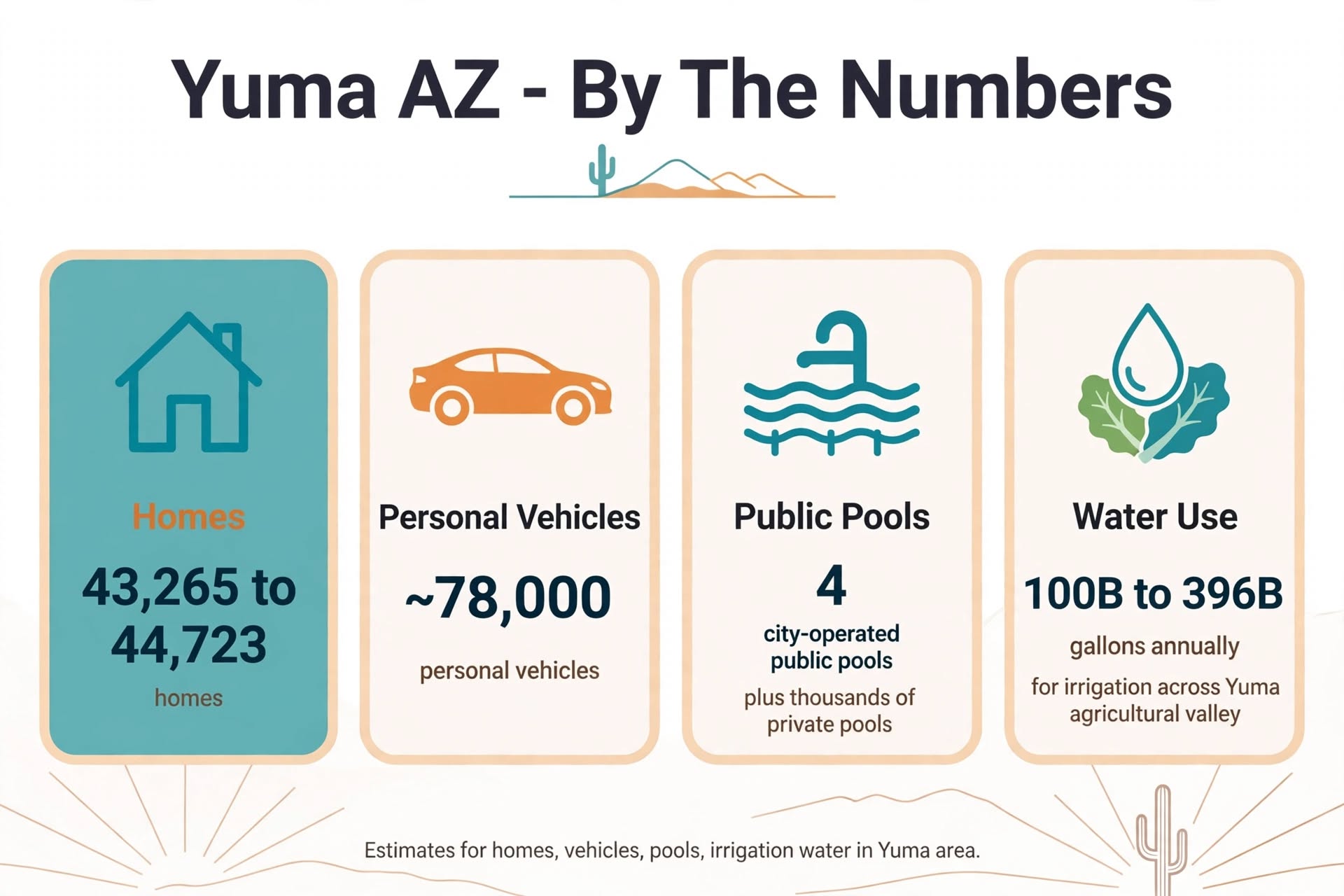
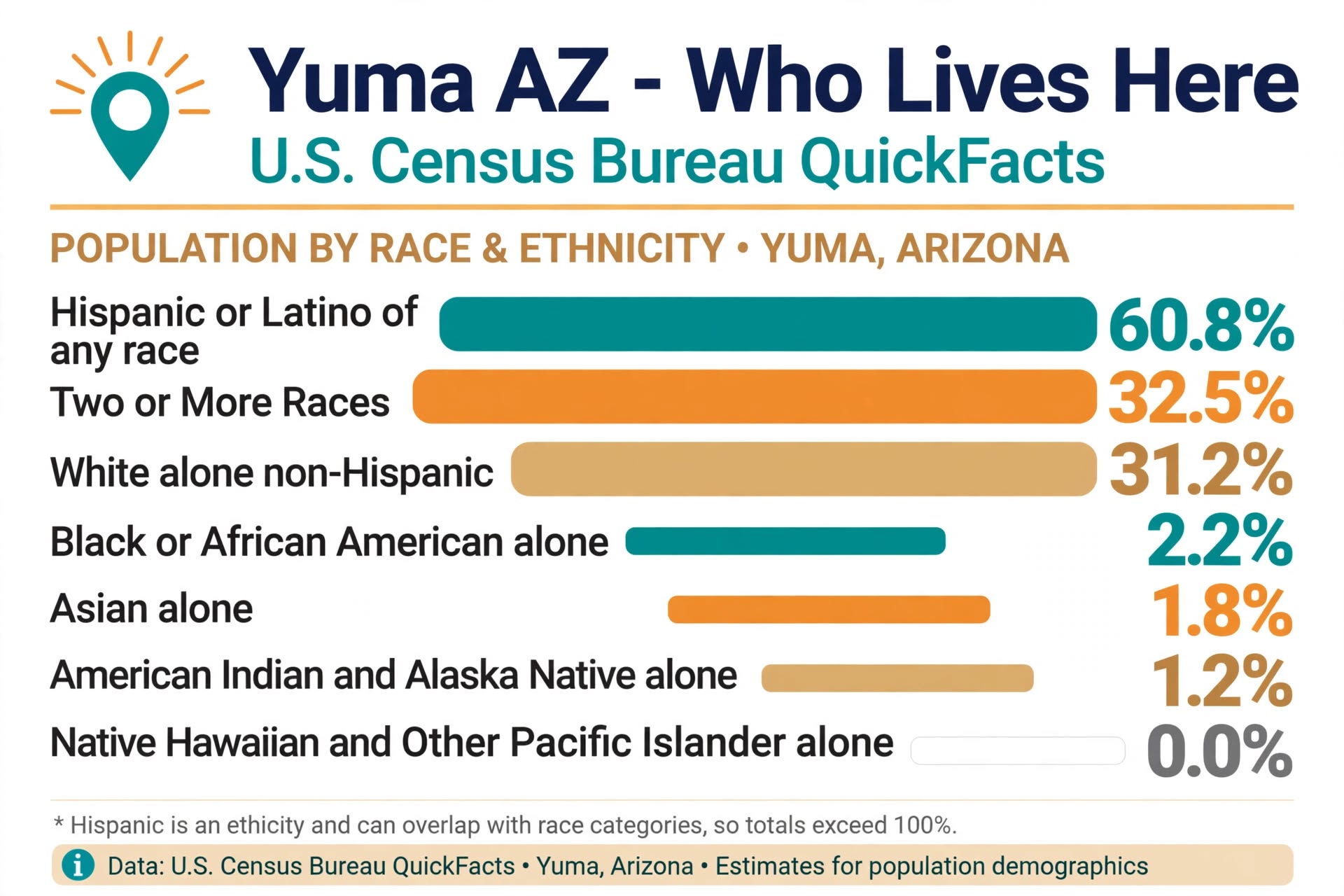
Sun & Climate
Yuma is the SUNNIEST CITY ON EARTH according to Guinness World Records — sunshine 91% of daylight hours, averaging 4,055 hours per year.
Phoenix is the 2nd sunniest city in the world, but Yuma gets nearly 150 MORE hours of sun annually.
Yuma receives only 3 inches of rainfall per year — making it one of the driest inhabited places on Earth.
The longest dry streak in Yuma history lasted 380 DAYS — from December 2001 to December 2002, not a single drop of rain.
Yuma is officially the LEAST HUMID city in the United States.
Temperatures exceed 100°F on approximately 100 days per year. Summer highs regularly surpass 120°F.
In peak summer, temperatures can exceed 125°F (50°C) — hotter than your oven's lowest setting.
Yuma has 175 days per year with a daily maximum temperature of 90°F or higher — the most in the contiguous US.
Despite the extreme heat, Yuma is NOT the hottest place on Earth. That title belongs to Furnace Creek in Death Valley.
Yuma averages 11 hours of sunlight in winter and up to 13 hours in summer — nearly the maximum possible.
Agriculture
Yuma is the 'Winter Lettuce Capital of the World,' producing 90% of all lettuce consumed in the US from November to March.
Yuma farmers produce 170 MILLION servings of lettuce PER DAY during winter peak season.
Yuma grows over 175 different crops year-round — from alfalfa to lemons to Bermuda grass seed.
1,500 to 2,000 refrigerated semi-trucks leave Yuma DAILY during peak harvest, feeding all of America and Canada.
Arizona leafy greens from Yuma generate $3 to $4 BILLION in economic output annually.
Yuma County ranks in the top 1/10th of 1% of all US counties for vegetable production.
Nearly 20% of Arizona's leafy greens are grown organically.
Desert Durum wheat accounts for 95% of all grain grown in Yuma County.
Two-thirds of Yuma's Desert Durum wheat is exported to ITALY for premium pasta production.
Yuma grows KOSHER wheat for Orthodox Jewish matzo — the desert's dry conditions ensure no moisture touches the grain before harvest.
A local Yuma feedlot houses 120,000 head of beef cattle at any given time.
Yuma is #1 in all of Arizona for lemons, tangelos, tangerines, watermelons, and cantaloupes.
Crops harvested in Yuma in the morning can be on a dinner plate in New York in just 4 days.
The Yuma area has approximately 22 cooling plants and 10 salad processing plants to handle the harvest volume.
The Yuma Project (1905) was one of the largest irrigation projects ever attempted in US history, taming the Colorado River.
River History
The Colorado River steamboat era ran from 1852 to 1909, with Yuma as the primary port for the entire Southwest.
The first steamboat, the 'Uncle Sam,' arrived at Fort Yuma in 1852 after a grueling 15-day trip upriver from the Gulf of California.
The Ocean to Ocean Bridge (1915) was the FIRST highway crossing of the lower Colorado River, connecting Arizona to California.
When the Ocean to Ocean Bridge was floated into place, ALL Yuma school kids got the day off to watch the historic event.
The original light-up 'YUMA OCEAN TO OCEAN HIGHWAY' sign from the 1915 bridge opening STILL EXISTS today.
The Yuma ferry operation was so lucrative that in one record day, ferrymen collected $884.50 (in 1850s money) by transporting 7,076 sheep across the river.
Famous ferryman Louis Jaeger operated the Colorado River crossing from 1850 to 1877 — nearly three decades of service.
The first ferry at Yuma Crossing was built with wooden pegs instead of nails — and ferried 20,000+ immigrants in 1851 alone.
The Butterfield Overland Mail stagecoaches crossed the Colorado River at Yuma, making it a critical stop on the transcontinental mail route.
The Prison
The Yuma Territorial Prison opened in 1876 with just 7 inmates who were FORCED to build their own cells before being locked in them.
After the prison closed in 1909, the building became YUMA HIGH SCHOOL — students literally attended class in former jail cells.
Yuma High School's mascot is 'The Criminals' — adopted proudly after Phoenix teams mocked them. The name is still used today.
The Yuma High football field was literally BUILT FROM PRISON BRICKS — remnants of the old territorial prison walls.
Pearl Hart, the notorious 'Bandit Queen,' was imprisoned here after robbing a stagecoach while disguised as a man.
111 prisoners are buried in unmarked graves in the prison cemetery — their names lost to history.
The prison's 'Dark Cell' was a pitch-black punishment room where guards threw SCORPIONS in for 'light.'
Ghosts & Paranormal
USA Today voted Yuma Territorial Prison the 'Best Haunted Destination in the Nation' — beating every other haunted site in America.
The little girl in the red dress drowned in the Colorado River retrieving her doll. Visitors wearing red report being PINCHED by her ghost.
An Arizona Highways journalist shackled herself in the Dark Cell for 37 hours to recreate the prisoner experience — and insisted she was NOT ALONE.
The gift shop ghost 'Johnny' rearranges COINS in the cash drawer but never touches the bills — as if still counting prison wages.
Military
The Yuma Proving Ground spans 1,300 SQUARE MILES of restricted Arizona desert — one of the largest military installations on Earth.
HALO (High-Altitude, Low-Opening) stealth parachute jumps were DEVELOPED at YPG in 1958 — now used by every special ops force worldwide.
MCAS Yuma's main runway is 13,300 feet long — enough concrete to build 37 MILES of two-lane highway.
MCAS Yuma supports 80% of ALL Marine Corps air-to-ground aviation training in the entire United States.
During the biannual Weapons and Tactics Instructor course, over 8,000 Marines log 8,000+ flight hours across 5,000+ sorties — in just one exercise.