
Desert & Wildlife
Imperial Sand Dunes (Glamis)
Forty miles west of Yuma, one of North America’s largest dune fields becomes a temporary desert city every winter — and a quiet wilderness the rest of the year.
A desert city made of sand
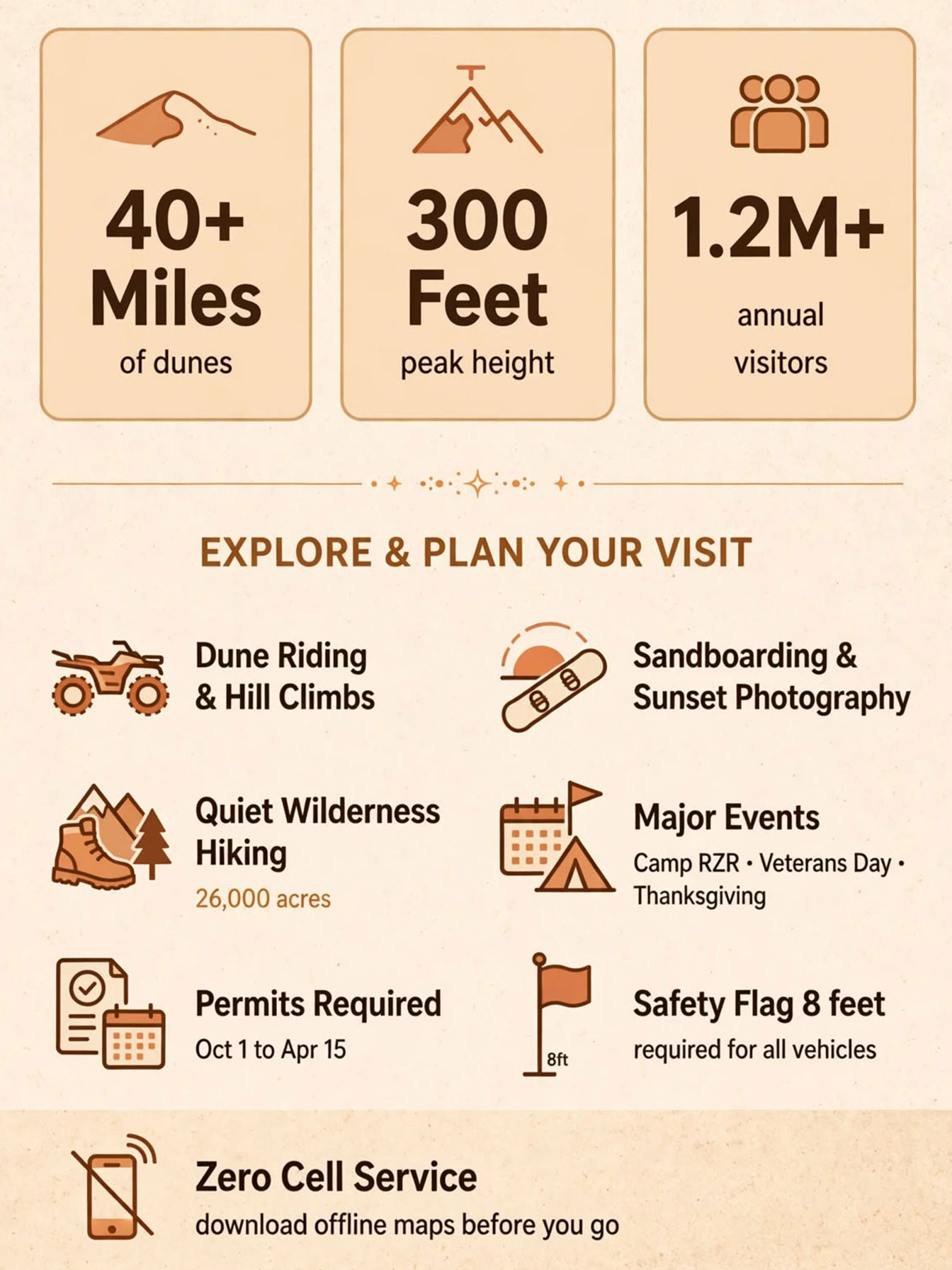
The Imperial Sand Dunes begin about 40 miles west of Yuma and run for more than 40 miles across the Colorado Desert. The tallest peaks rise roughly 300 feet above the surrounding flatland. This is one of the largest dune fields in North America — and it is still moving.
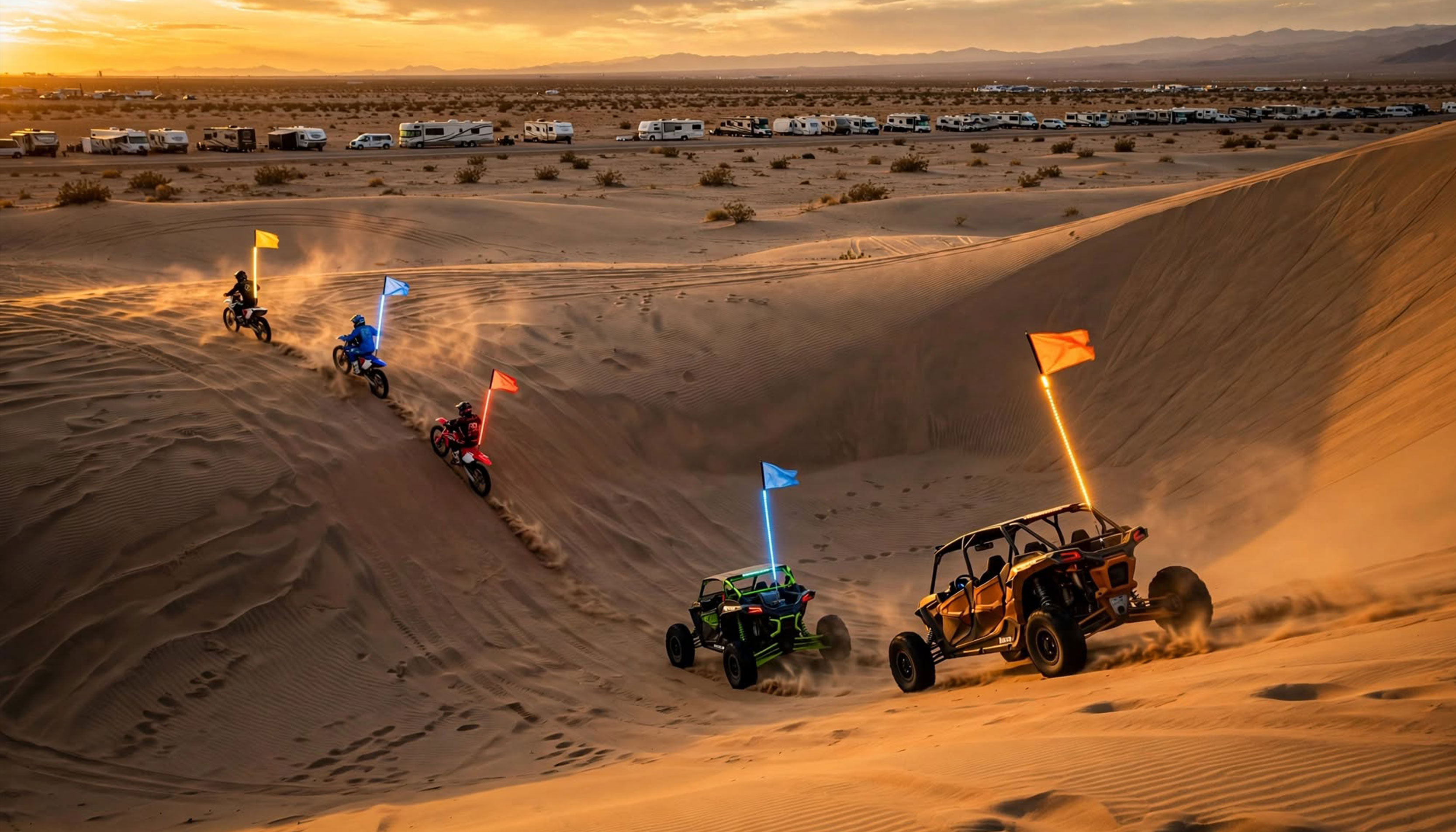
Between October and April, the recreation areas around Glamis, Buttercup and Gordon’s Well turn into a temporary desert city. More than 1.2 million people visit each year. On a holiday weekend, the horizon can be a wall of RVs, toy haulers and whip flags; on a quiet weekday morning, it can feel like the edge of another planet.
What people actually do
The action centers on a few signature experiences. You can bring a customized sand rail, a camera, or just a pair of boots.
- Dune riding and hill climbs. Off-roaders in UTVs, dirt bikes, ATVs and 1,000-horsepower sand cars flock to natural bowls such as Oldsmobile Hill, Competition Hill, Buttercup and Gordon’s Well for steep climbs and twilight night rides lit by glowing LED whip flags.
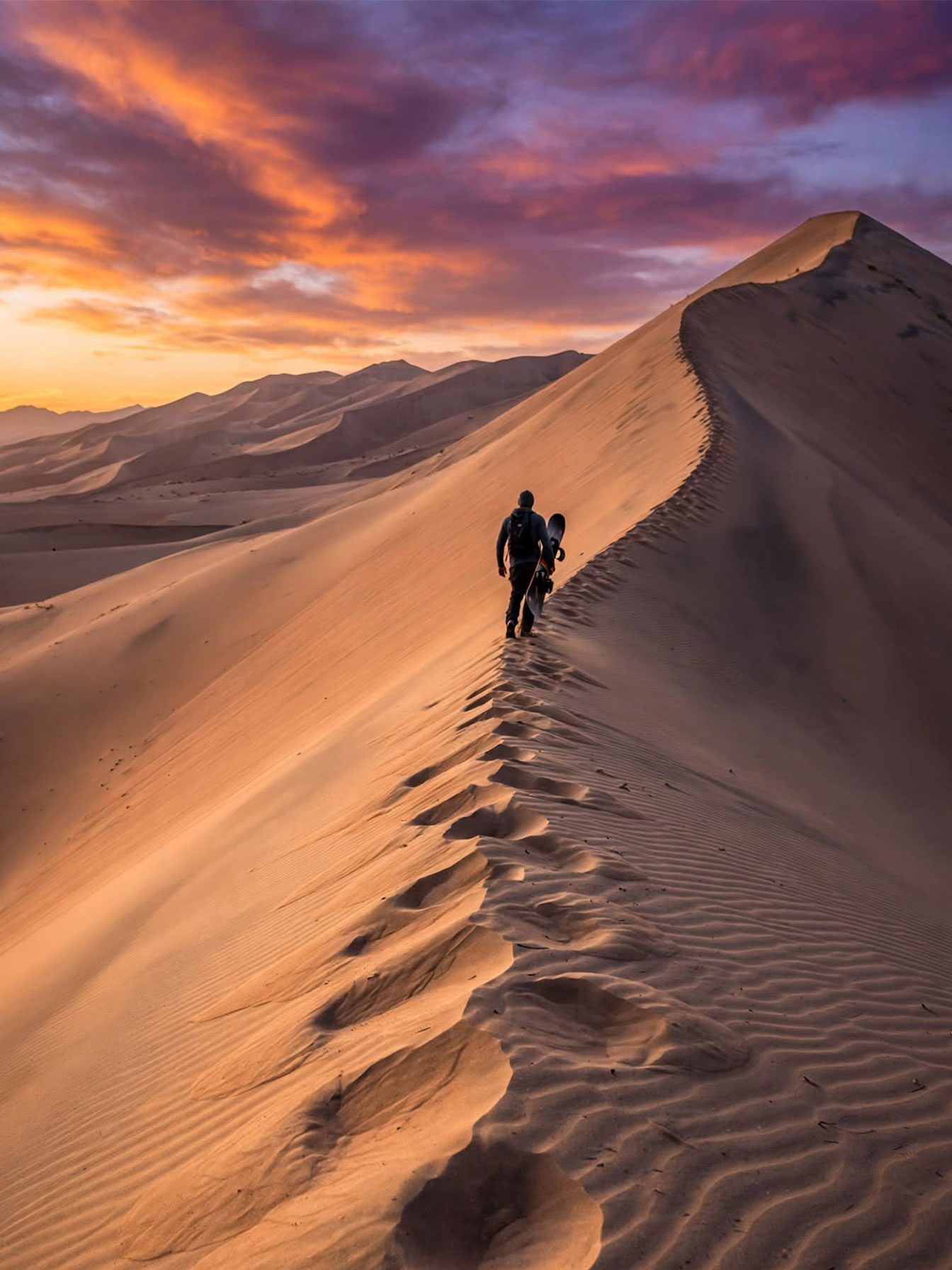
- Sandboarding and sunset photography. You do not need an engine to enjoy the sand. Families hike the ridges for sandboarding, while photographers time their visits for golden hour, when low desert light turns the wind-rippled slopes into deep amber waves.
- Quiet wilderness hiking. On the northern end, the 26,000-acre North Algodones Dunes Wilderness is permanently closed to all motorized vehicles, preserving an untouched landscape for hikers and horseback riders.
The winter calendar
During peak season, massive gatherings draw tens of thousands of riders and spectators through Yuma. Holiday weekends are the busiest; weekdays are a different desert.
- Camp RZR (Halloween weekend). Hosted by Polaris in late October, this season-kickoff festival brings vendor villages, demo rides, live entertainment and concerts to the sand.
- Glamis Veterans Day Gathering (November). This patriotic tradition draws upwards of 20,000 riders and families to the Patton Box flagpole for a Saturday morning flag-changing ceremony and a community dune cleanup.
- Thanksgiving and New Year’s weekends. These are the biggest holiday blowouts of the year, when RVs pack Gecko Road and Buttercup Valley for days of non-stop dune runs.
- Red Bull Sand Scramble and Rebelle Rally. Competitive racing takes over the sand during the Red Bull Sand Scramble, a high-speed UTV circuit race, and the Rebelle Rally, an all-women off-road navigation rally that sends drivers across a grueling 180-kilometer dune stage without GPS.
- MLK Weekend Dune Cleanup (January). Hosted at Camp Genesis, this combines family-friendly riding with a massive volunteer trash-collection drive to keep the desert clean.
Hollywood in the sand
The dunes look remarkably like the Sahara or an alien planet, yet sit within driving distance of Los Angeles and Yuma’s hotels. Hollywood has used them as a stand-in for distant worlds for nearly a century.
- Star Wars: Episode VI — Return of the Jedi (1983). George Lucas built a full-scale replica of Jabba the Hutt’s Sail Barge and the Great Pit of Carkoon in Buttercup Valley in 1982. The crew logged more than 5,500 hotel nights in Yuma, hired local residents as builders and security, and later returned for extra Tatooine scenes in the A New Hope Special Edition.
- Spaceballs (1987). Mel Brooks brought his sci-fi parody crew back to the same dunes for the famous “comb the desert” gag.
- Stargate (1994). Kurt Russell and James Spader crossed these slopes as the alien desert planet Abydos — a shoot Russell famously called his “sand dune workout.”
- Jumanji: The Next Level (2019). Dwayne Johnson, Kevin Hart, Jack Black and Karen Gillan filmed major desert chase sequences across the dunes.
- Also on the sand. Film crews have shot The Garden of Allah (1936), Morocco (1930), Road to Morocco (1942), The Flight of the Phoenix (1965), Tobruk (1967), Jarhead (2005) and Resident Evil: Extinction (2007) in the area.
Famous faces, then and now
When Hollywood rolls into the dunes — or off-road culture heats up — celebrities inevitably turn up around Yuma and Glamis.
- The original Star Wars cast. During the 1982 shoot, Harrison Ford, Mark Hamill and Carrie Fisher stayed in Yuma and worked in the blistering Buttercup heat. Behind-the-scenes photos captured Fisher and her stunt double sunbathing on Jabba’s sail barge between takes.
- Modern action and comedy stars. Productions such as Jumanji: The Next Level and Stargate brought Dwayne Johnson, Kevin Hart, Jack Black, Karen Gillan and Kurt Russell out to the sand.
- Motorsport and Yuma sightings. Off-road legends including Ken Block, Travis Pastrana and Robbie Maddison have torn up Glamis for stunts and events. Local film lore also ties Yuma’s historic downtown and cafes to Sylvester Stallone, the Baldwin brothers, Marilyn Monroe and John Wayne in earlier decades.
Field notes before you go
Permits, flags and offline maps matter more than horsepower. The desert is beautiful, but it is not a place to wing it.
- Permits are required in season. Between October 1 and April 15, every primary vehicle entering the dunes needs a Bureau of Land Management recreation permit. Buy yours online or at an authorized vendor in Yuma before driving out; buying at the ranger station costs significantly more.
- Fly an eight-foot safety flag. Off-road vehicles must fly an orange or red whip flag at least 8 feet off the ground so riders can see each other over blind dune crests.
- Expect zero cell service. Cell reception drops to zero deep in the sand. Download offline maps before leaving Yuma, carry more water and fuel than you think you need, and tell someone where you are going.
- Respect the wilderness. The North Algodones Dunes Wilderness is closed to all motorized vehicles. Hike or ride horseback instead, and pack out everything you bring in.
Questions
Before you go
When is the best time to visit?
October through April is peak season. Holiday weekends are the busiest; weekdays are quieter. Summer heat is extreme.
Do I need a permit?
Yes. Between October 1 and April 15, every primary vehicle entering the dunes needs a Bureau of Land Management recreation permit. Buy it online or from an authorized vendor in Yuma before you go.
Can I visit without an off-road vehicle?
Yes. Park at an established area and explore on foot or with a sandboard. Do not drive a standard car into soft sand.
What should I bring?
Water, fuel, sun protection, offline maps, and an eight-foot orange or red whip flag if you are riding. Cell service is unreliable.
Last reviewed: November 17, 2026. See our sources and editorial policy.